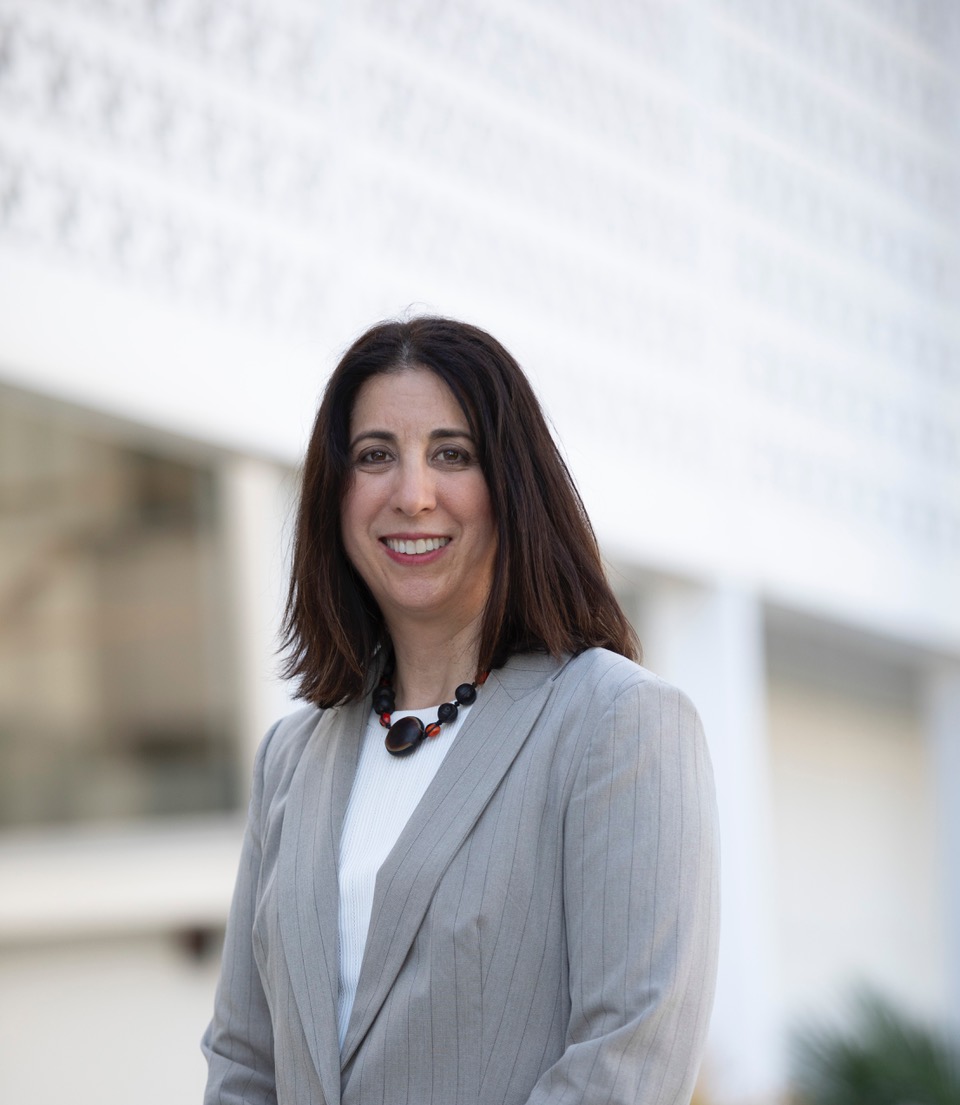
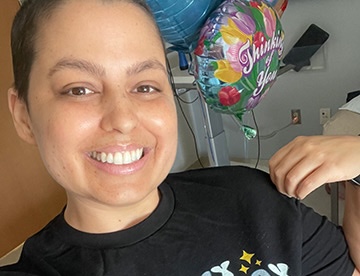
Lynn Leiro, 40, an Alhambra resident, was diagnosed with leukemia in late 2023, just weeks after completing treatment for triple-negative breast cancer. After experiencing severe headaches and abnormal blood work, she sought specialized care at City of Hope, where she learned she had acute lymphoblastic leukemia.
“Everything I knew about cancer changed overnight,” Leiro said. “I was told I wasn’t leaving the hospital and that I would need a transplant.”
Leiro underwent multiple rounds of chemotherapy and immunotherapy that failed to bring her disease into remission. In May 2024, she received chimeric antigen receptor (CAR) T-cell therapy, an innovative treatment that uses genetically modified immune cells to target cancer, a therapy that City of Hope helped to develop.
CAR T-cell therapy successfully put her leukemia into remission and made her able to undergo a BMT. She underwent a transplant at City of Hope on August 23, 2024.
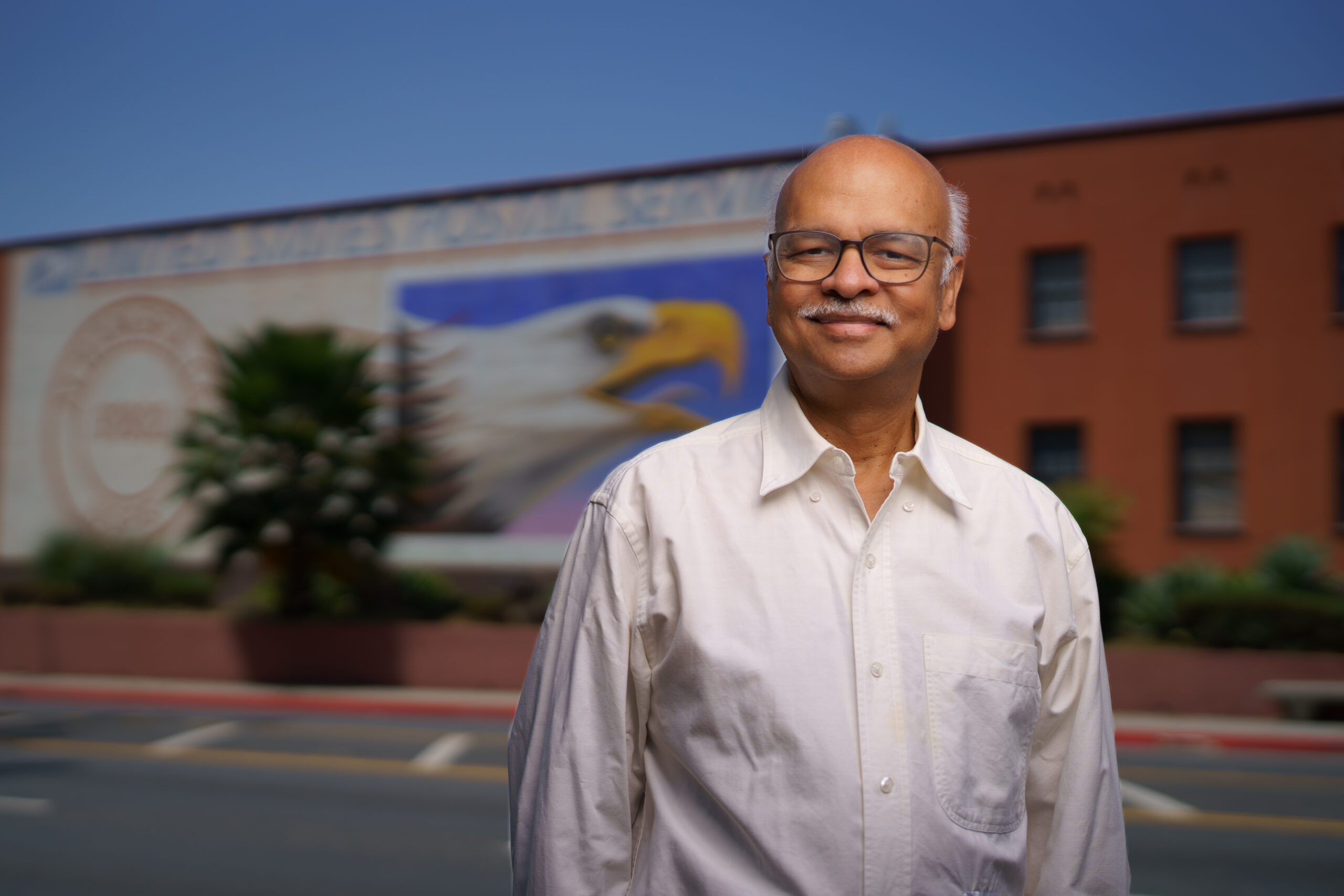
“Lynn’s case reflects both the complexity of blood cancers and the importance of having access to advanced, specialized care,” said Vaibhav Agrawal, M.D., M.B.A., Leiro’s doctor and City of Hope hematologist. “Through CAR T-cell therapy and transplantation, we were able to help her reach remission and move into recovery. Her resilience and advocacy for herself were critical throughout that process.”
Leiro said her donor – Patrick Abboud, 28, of Asheville, North Carolina – gave her something beyond survival.
“Because of my donor, I was able to see my daughter graduate high school and go off to college,” she said through tears. “I get more time with my family, more time to make memories. I’ll never be able to repay that gift.”
Leiro said she plans to host a party with family and friends who also want to thank Abboud for his selfless act of donation through the National Marrow Donor Program (NMDP).
Leiro encouraged people to register to join the bone marrow registries through DKMS or NMDP.
City of Hope’s BMT legacy
Leiro of Alhambra will meet her unrelated donor for the first time at City of Hope’s annual BMT Reunion on Friday, May 1, on the Duarte campus.
The reunion marks the 50th anniversary of City of Hope’s BMT program – one of the most innovative, longest-running and most successful transplant programs in the country with more than 20,000 transplants performed since 1976. City of Hope’s BMT program is internationally recognized for advancing BMT science, CAR T-cell therapy and personalized cancer care.
“When City of Hope performed its first bone marrow transplant in 1976, the field was still in its infancy,” said Dr. Forman, who joined City of Hope in 1978. “Early on in the BMT program, we made a promise to keep pushing the science forward so that curing blood cancers would become safer, smarter and available to more patients. That commitment continues to guide us today.”
In the five decades since, more than 20,000 patients have undergone bone marrow transplants at City of Hope, and many remain closely connected to the program long after their treatment ends. Throughout the process, BMT patients are supported by multidisciplinary teams that remain engaged long after discharge through extended follow-up and a survivorship community that continues for years.
“Over decades of refinement, City of Hope helped transform BMTs into a treatment that gives more patients a second chance at life,” said Dr. Forman. “We’ve intentionally taken on the most challenging cases — patients without perfect donor matches, patients living with HIV and blood cancer, older patients with complex medical needs — because progress in BMT medicine has always depended on asking and answering who else we can help.”
For patients like Leiro, the reunion is more than a celebration — it is a rare moment to meet the people whose generosity made a cure possible and to reflect on the science, compassion and persistence that have defined City of Hope’s BMT program for 50 years.
About City of Hope
City of Hope’s mission is to make hope a reality for all touched by cancer and diabetes. Founded in 1913, City of Hope has grown into one of the largest and most advanced cancer research and treatment organizations in the United States, and one of the leading research centers for diabetes and other life-threatening illnesses. City of Hope research has been the basis for numerous breakthrough cancer medicines, as well as human synthetic insulin and monoclonal antibodies. With an independent, National Cancer Institute-designated comprehensive cancer center that is ranked among the nation’s top cancer centers by U.S. News & World Report at its core, City of Hope’s uniquely integrated model spans cancer care, research and development, academics and training, and a broad philanthropy program that powers its work. City of Hope’s growing national system includes its Los Angeles campus, a network of clinical care locations across Southern California, a new cancer center in Orange County, California, and cancer treatment centers and outpatient facilities in the Atlanta, Chicago and Phoenix areas. City of Hope’s affiliated group of organizations includes Translational Genomics Research Institute and AccessHopeTM. For more information about City of Hope, follow us on Facebook, X, YouTube, Instagram and LinkedIn.