
Throughout most of our history, humans struggled with food security and had to work hard to fill their bellies. In developed countries, humans now produce far more food than we could ever eat. Food waste and inefficiency is a big problem. Some estimates say that up to 30% of the food we produce gets tossed out. That’s not just a waste of all the time, effort, and resources, it’s bad for the environment. The United Nations found that wasted food accounts for up to 10% of the world’s greenhouse gas emissions!
Fortunately this is one environmental issue with some easy (and delicious) solutions. Here are few tips to eat away at this problem:
1. Buy Only What You Need…
We’ve all been guilty of SWH, that is “shopping while hungry.” We get too ambitious, buy too much, and we end up wasting perfectly good food when it goes bad. Experts recommend pre-planning your weekly meals, buying shelf-stable foods, and limiting your purchase to what you know you will eat.
2. …And Compost What You Don’t
Start a compost bin in your backyard for vegetable scraps and yard waste. It’s fun, easy, and a great way to make your own fertilizer for your gardens. Or you can just use the green bins provided by Republic Services. You can use this for all food waste and organic material, even for soiled pizza boxes and meat/bones. This helps to avoid harmful emissions like methane that are produced when green waste sits in a landfill.
3. Support Restaurants that Value Sustainability
Look for restaurants that emphasize sustainability and environmental responsibility. Alhambra’s own Yang’s Kitchen is one of the local leaders in this movement. They feature everything from responsibly grown seafood, to locally milled grains, to produce direct from the farmers market. Their commitment to sustainability is as impressive as their inspired food, which has gained national recognition. Chef Christian Yang told me the restaurant focuses on sustainability “because it’s the right thing to do,” and the food “tastes better when we buy from better sources.” Cheers to that, Yang’s!
4. Eat Seasonally and Locally
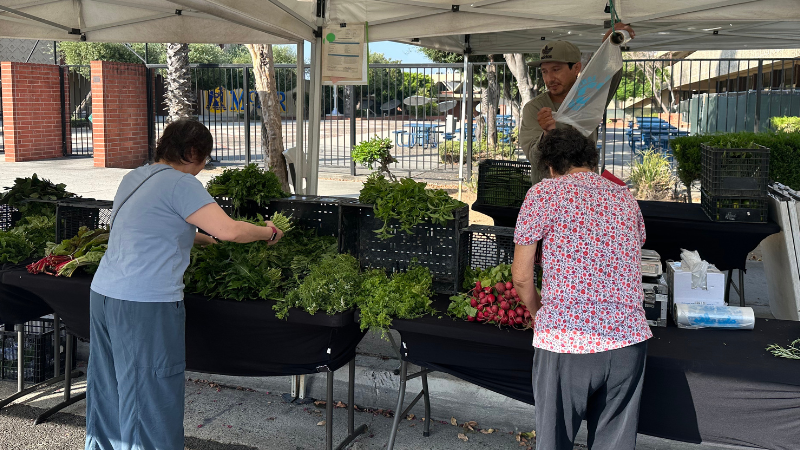
Eating food when it’s in season is a great way to ensure peak freshness and minimal environmental impact. California is blessed with some of the best produce in the world but even California imports produce from around the country and the world to meet demand for off-season produce. It’s unrealistic to avoid all imported food, but we can minimize the impact by focusing on seasonal foods grown nearby. A great way to do this is to simply shop at our own Alhambra Certified Farmers Market – it’s an easy way to guarantee that your foods are grown locally and in season. Websites like seasonalfoodguide.org are a great tool to assist.
5. Grow Your Own
Backyard vegetable gardens or a plot at a community garden are great ways to get your hands dirty growing your own fruits and vegetables. It can save you money, but it also minimizes environmental impact and maximizes flavor. There’s nothing like a fresh tomato fresh off the vine! Bonus points for using compost you’ve made from discarded organic waste.
Do you have tips on how to reduce food waste? Do you run a business that emphasizes sustainable practices? Please share! Email me at: jmaloney4alhambra@gmail.com.
Jeff Maloney is Chief Counsel for the Santa Monica Mountains Conservancy and has served on the Alhambra City Council since 2016.